← Home · Investigation

Exploratory Test Pits for Construction in Hartford CT

Together, we solve the challenges of tomorrow.

LEARN MORE →

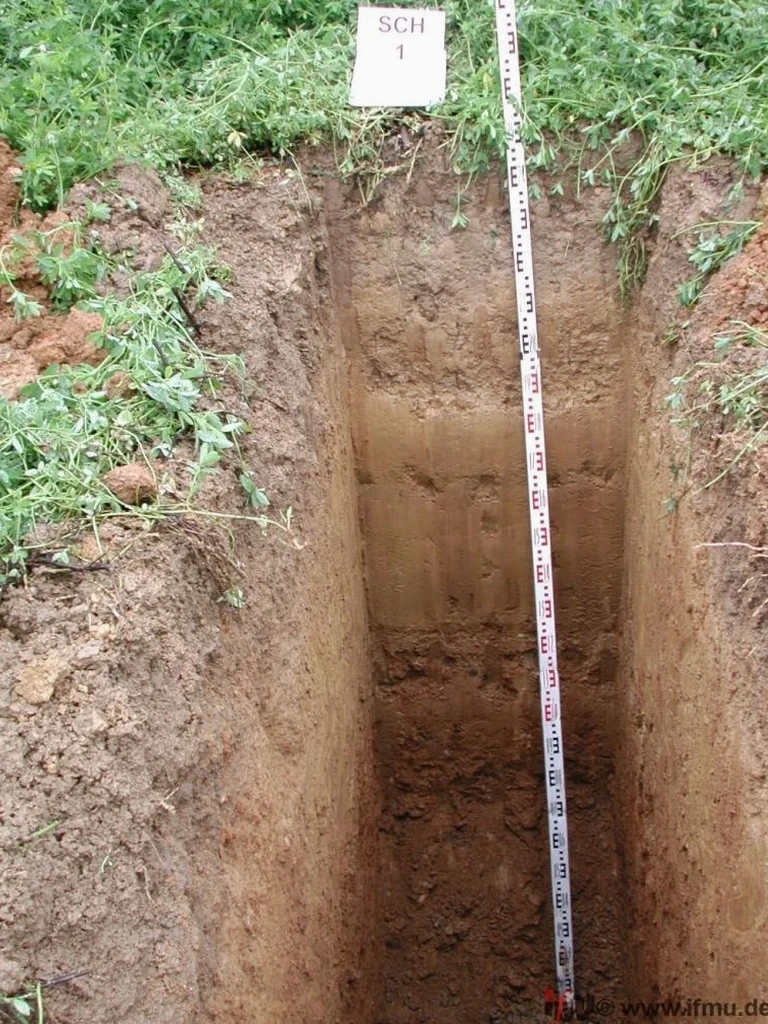
Hartford sits at just 59 feet above sea level on the Connecticut River floodplain. That low elevation means groundwater often shows up within the first six feet of excavation. We opened three test pits off Albany Avenue last week and hit silt with organics at four feet. The developer had assumed sand. Our exploratory test pit work in Hartford CT directly changes foundation decisions. We log the strata, photograph the sidewalls, and pull undisturbed samples for the lab. When the soil profile tells a different story than the borings, the test pit gives you the visual proof. For deeper refusal verification we pair this with SPT drilling to get N-values below the pit floor.

One open pit wall tells more about Hartford's glacial lake deposits than ten split-spoon samples from a boring.

Our approach and scope

Downtown Hartford near Bushnell Park sits on glacial lake deposits—fine varved silts and clays that stand vertically when exposed but soften fast with rain. Out toward the South End by Franklin Avenue, the soils shift to sandier outwash with gravel lenses. We dug a six-foot exploratory test pit last month where these two regimes meet and the transition layer was barely two inches thick. Visual inspection caught it. A boring alone might have missed it. When the project demands bearing capacity numbers to back the visual log, we run a plate load test right at the pit floor elevation.
Exploratory Test Pits for Construction in Hartford CT
Technical reference image — Hartford Connecticut

Site-specific factors

Hartford winters freeze the ground to about 18 inches in exposed lots. Spring thaw turns the glacial silt into a saturated paste that collapses pit walls within hours. We schedule exploratory test pits in Hartford CT around these cycles. A pit opened in March with snowmelt running in looks completely different from the same location in August. The IBC requires adequate shoring or benching for any excavation over five feet deep. We enforce that on every job. If the pit stays open overnight, a tarp and pump are mandatory. Ignoring the freeze-thaw rhythm of the Connecticut River valley produces a soil log that misrepresents the in-situ moisture condition—and the foundation design suffers for it.

Need a geotechnical assessment?

Reply within 24h.

Email: [email protected]

Technical parameters

ParameterTypical value
Typical excavation depth8 to 12 ft below grade
Standard pit width (safe entry)30 to 36 inches
Sample typeUndisturbed Shelby tube and bulk bag
Logging standardASTM D2488 visual-manual classification
Groundwater documentationSeepage depth and rate recorded
Backfill compaction spec95% standard Proctor per project requirement
Typical open time for logging2 to 4 hours per pit

Other technical services

01

Foundation bearing verification

We excavate a test pit at the proposed footing elevation and log the bearing stratum visually. A pocket penetrometer reading plus a lab classification gives you defensible bearing capacity data without waiting for a full geotechnical report.

02

Utility conflict identification

Hartford's older neighborhoods have unmarked brick sewers and abandoned steam lines. Our exploratory test pits expose existing utilities before the excavator bucket finds them. We locate, photograph, and map conflicts so the civil engineer can adjust the design.

03

Soil sampling for lab testing

We pull undisturbed Shelby tubes and bulk samples directly from the pit floor and sidewalls. Samples go to our accredited lab for grain size distribution, Atterberg limits, and consolidation testing.

Reference standards

IBC 2021 Chapter 18 (Soils and Foundations), ASTM D2488 (Visual-manual soil description), ASCE 7-22 (Minimum design loads), OSHA 29 CFR 1926 Subpart P (Excavation safety)

Quick answers

What does an exploratory test pit in Hartford CT typically cost?

For a standard test pit excavated to 8-10 feet with visual logging, photography, and sampling, expect between $570 and $760. The final number depends on access, depth, and whether we need traffic control or a vacuum excavator near utilities.

How deep can you safely excavate a test pit?

We routinely go to 12 feet with proper benching or hydraulic shoring. Beyond that, OSHA requires engineered shoring design. In Hartford's silty soils, we never send a person into an unshored pit deeper than five feet.

What information does a test pit provide that a boring cannot?

A test pit exposes a continuous vertical face. You see stratification, lensing, fractures, root penetration, and fill boundaries directly. A boring gives you a disturbed sample every few feet. The test pit shows what happens between those intervals.

How long does a test pit stay open for inspection?

We typically keep the pit open for two to four hours for logging and sampling. If the geotechnical engineer or building official needs more time, we can schedule an extended open period with shoring, tarping, and dewatering as needed.
Location and service area

We serve projects in Hartford Connecticut and surrounding areas. More info.

View larger map