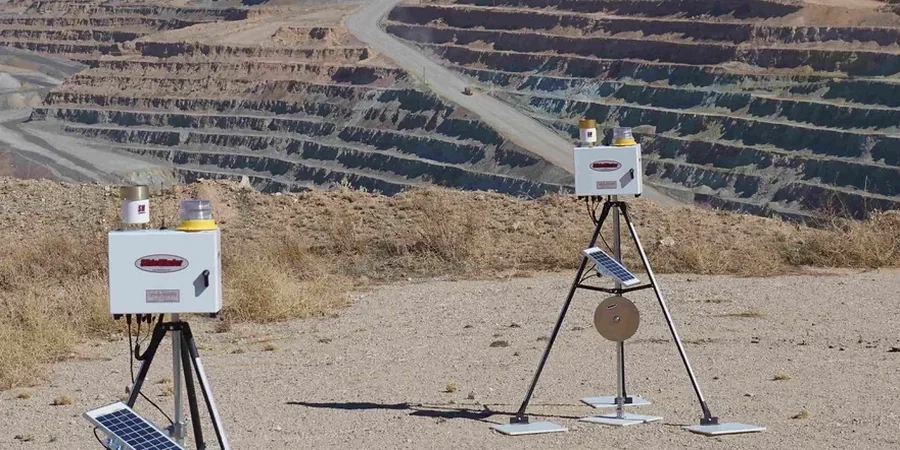
Hartford sits on a sequence of glacial lake sediments—the varved silts and clays of glacial Lake Hitchcock—deposited roughly 15,000 years ago. These thinly layered soils create real challenges for any excavation deeper than 15 feet, because water migrates along silt seams and pore pressures can shift without warning. When we plan a monitoring program downtown, we know the water table often sits just 8 to 12 feet below grade, which means dewatering effects show up in the inclinometer and piezometer data within the first week. A well-designed instrumentation plan isn't optional here; it's what keeps a shored excavation stable when the varves decide to misbehave. For deeper cuts near the Connecticut River, we often recommend coupling real-time monitoring with a pre-construction CPT test to map the silt-clay transitions before the first bucket hits the ground.
In Hartford's varved clays, the most useful monitoring data comes from the first week of dewatering—that's when the pore-pressure regime reveals how the excavation will behave.
Reference standards
ASCE 7-22 (Minimum Design Loads and Associated Criteria for Buildings and Other Structures), IBC 2021 Section 3304 (Excavation, Grading, and Fill), ASTM D1586 (Standard Test Method for Standard Penetration Test and Split-Barrel Sampling of Soils), ASTM D2487 (Standard Practice for Classification of Soils for Engineering Purposes), FHWA GEC No. 4 (Ground Anchors and Anchored Systems)
Quick answers
What is the typical cost range for geotechnical excavation monitoring in Hartford?
Monitoring programs in Hartford generally range from US$850 for a short-term, single-parameter setup on a small site to US$2,550 for a comprehensive instrumentation package on a deep excavation with automated data acquisition over several months. The final figure depends on the number of instruments, reading frequency, and reporting requirements.
How do varved clays affect monitoring data interpretation in Hartford?
Varved clays are anisotropic—they drain faster along silt seams than across clay layers. This means pore-pressure readings can drop sharply in one piezometer while another 3 feet away shows little change. We interpret the data against the known stratigraphy, often using CPT soundings to correlate the instrument depths with specific varve sequences.
What is the minimum monitoring duration for a typical Hartford excavation?
Baseline readings start at least two weeks before excavation, continue through the entire cut and support installation phase, and extend at least 30 days after backfill to confirm stabilization. For deep excavations near the Connecticut River, we often extend the post-construction monitoring through one full seasonal groundwater cycle.
Do you coordinate monitoring data with the excavation contractor in real time?
Yes. We set threshold alerts that notify the superintendent and the engineer of record simultaneously via SMS and email. During critical phases—such as tieback stressing or the final 5 feet of cut—we provide verbal readouts at the end of each shift so the contractor can adjust the sequence immediately.